
Water heater repair · Las Vegas, Nevada
Water Heater Repair in Las Vegas, NV.
No hot water, uneven temperatures, or a leaking tank?
Call (877) 364-0435
What water heater repair in Las Vegas involves
Water heater repair starts with finding out why the unit leaks, runs out of hot water, or heats unevenly. A puddle near a tank does not always mean the tank itself has failed. Water can travel down a supply connection, collect beneath a relief-valve discharge pipe, or seep from a drain valve. The source matters because a leaking fitting calls for a different repair than a corroded tank.
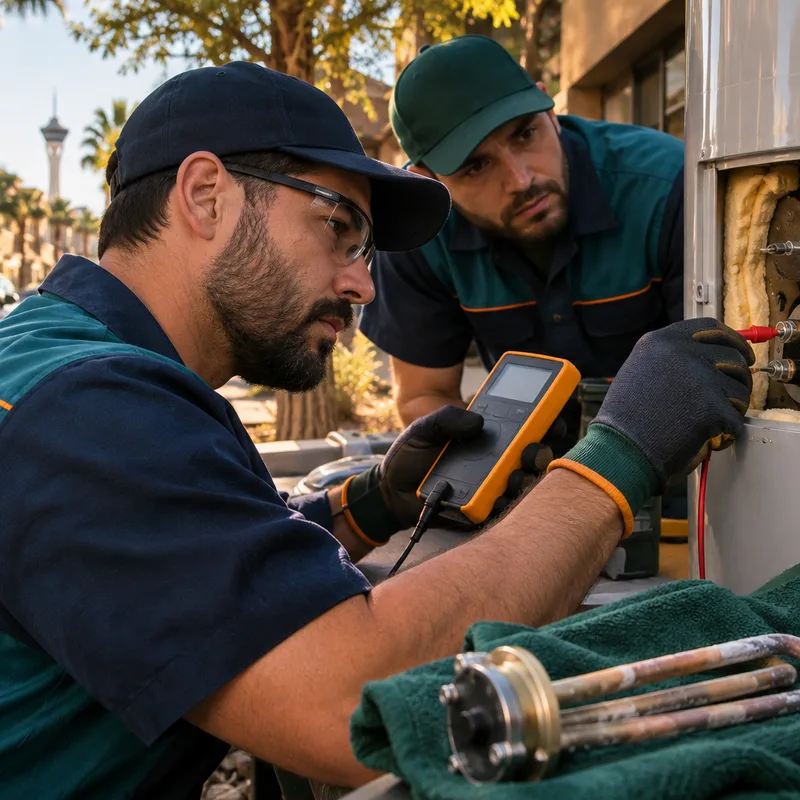
A contractor usually checks the unit type, its visible connections, and the symptoms before recommending work. On a gas heater, that may include the burner, pilot or ignition system, thermostat, and venting. On an electric heater, the thermostat and heating elements are common points to test. A contractor can also check whether a mixing valve, fixture, or household plumbing issue is affecting the temperature at the tap. The contractor explains the findings and gives you a quote; you decide whether to proceed.
Las Vegas-area water is mineral-rich, so sediment buildup is worth discussing when a heater makes rumbling sounds or delivers less usable hot water. Sediment can collect at the bottom of a tank and interfere with heating. It does not explain every loss of hot water, though. Testing the heating components and locating any leak come first.
Water heater problems worth checking
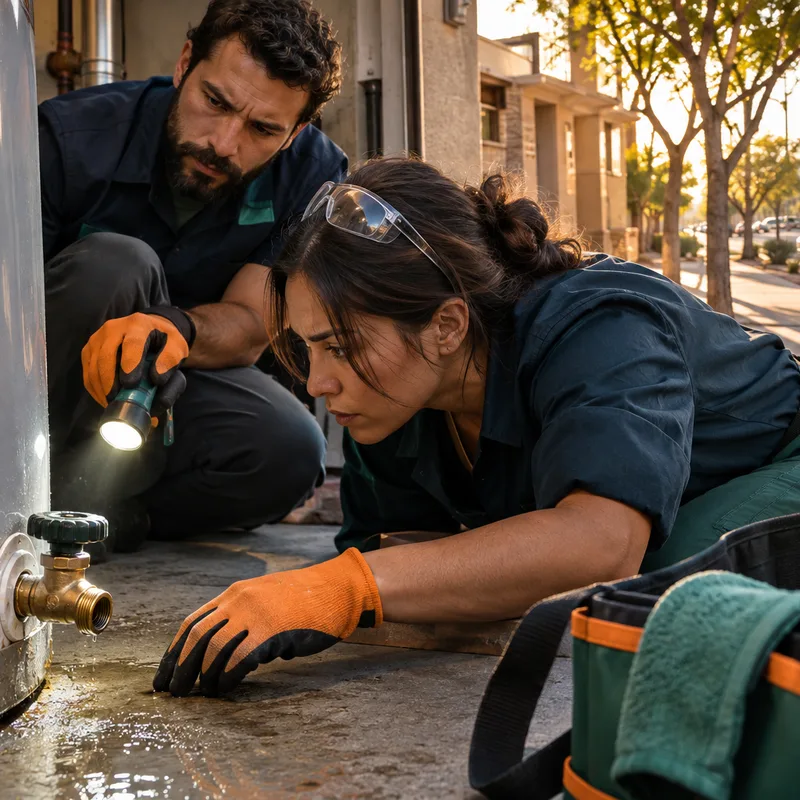
Water around the tank
A contractor traces moisture to its source, including the inlet and outlet connections, drain valve, relief valve, and tank body. Water emerging through a corroded tank usually changes the discussion from repair to replacement.
Hot water runs out
Sediment, a failed electric heating element, a thermostat fault, or a gas heating problem can reduce the hot water available. The cause depends on the heater and how it behaves during use.
Temperature changes
Water that turns unexpectedly hot or cool may point to a control problem, a mixing valve, or a fixture issue. A contractor can check the heater and compare what happens at different taps.
Noisy operation
Popping or rumbling from a tank can occur as water heats around accumulated sediment. A contractor can assess the unit's condition before recommending flushing or another approach.
How the Call Works
Make the call
Have the heater type and symptoms handy.
Check availability
Phone hours and plumber availability vary.
Discuss the problem
If a plumber is available, ask what they would check and how they price the visit.
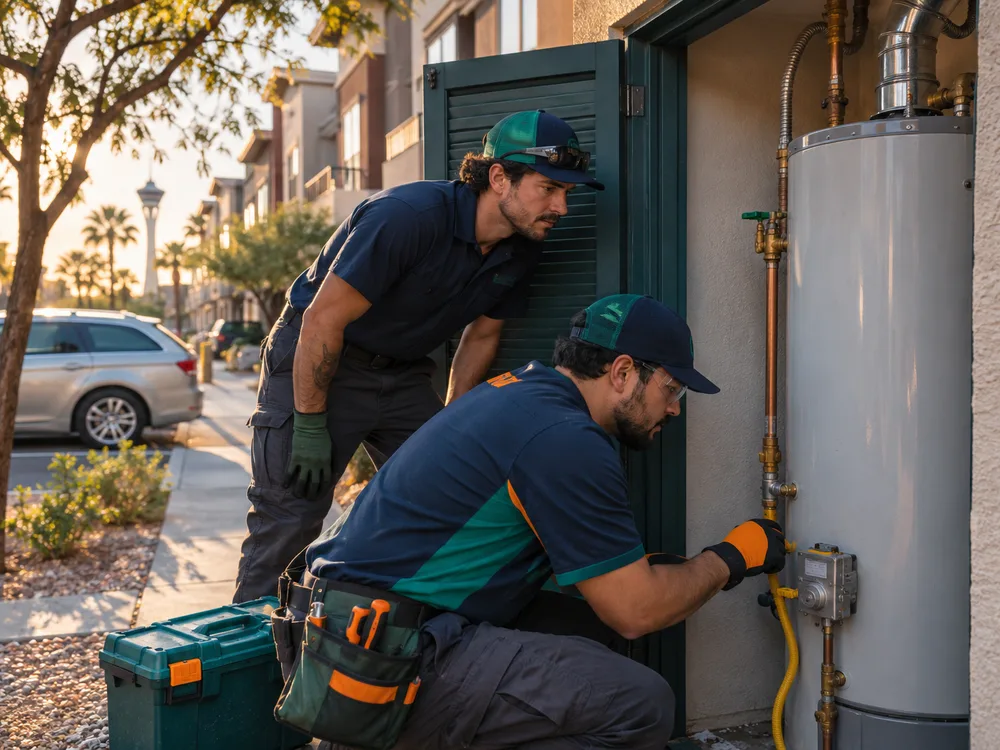
What a water heater inspection may focus on
Questions about Las Vegas water heater repair
Can a leaking water heater be repaired, or does it need replacement?
A leaking valve or pipe connection may be repairable, while water escaping through the tank body generally calls for replacement. The contractor locates the source before recommending either option. If the unit needs replacing, ask how the new heater's size, fuel type, and installation requirements compare with the existing setup.
What happens during a water heater repair visit?
The contractor examines the heater, checks the symptoms, and tests components relevant to the problem before discussing the proposed work. Depending on the findings, the job may involve replacing a valve, thermostat, heating element, or other component. The contractor gives you the quote and explains any work needed before you decide.
Why is my water hot at one faucet but cool at another?
Different temperatures at different faucets can indicate a fixture or mixing-valve problem rather than a heater fault. Tell the contractor which taps are affected so they can compare the symptoms and check the likely source. That distinction can prevent work on a heater that is operating normally.
Should I keep using a water heater that is leaking?
An active leak needs attention because water can damage nearby flooring and materials. If you can do so safely, follow the shutoff instructions for your unit and avoid contact with electrical equipment or hot water. A local contractor can identify the leak and explain the appropriate repair or replacement.
What should I ask before agreeing to a repair?
Ask which component caused the problem, what the proposed repair includes, and whether the contractor found any reason to consider replacement instead. You can also ask about warranty terms for the proposed work. The contractor provides the quote, and the decision is yours.
Get help with your water heater.
A local plumber can check what’s causing the leak or loss of hot water and explain your repair options.
Call (877) 364-0435