
Leak detection · Las Vegas, Nevada
Leak Detection & Repair in Las Vegas, NV
Damp walls, water stains, or a water bill that suddenly went up?
Call (877) 364-0435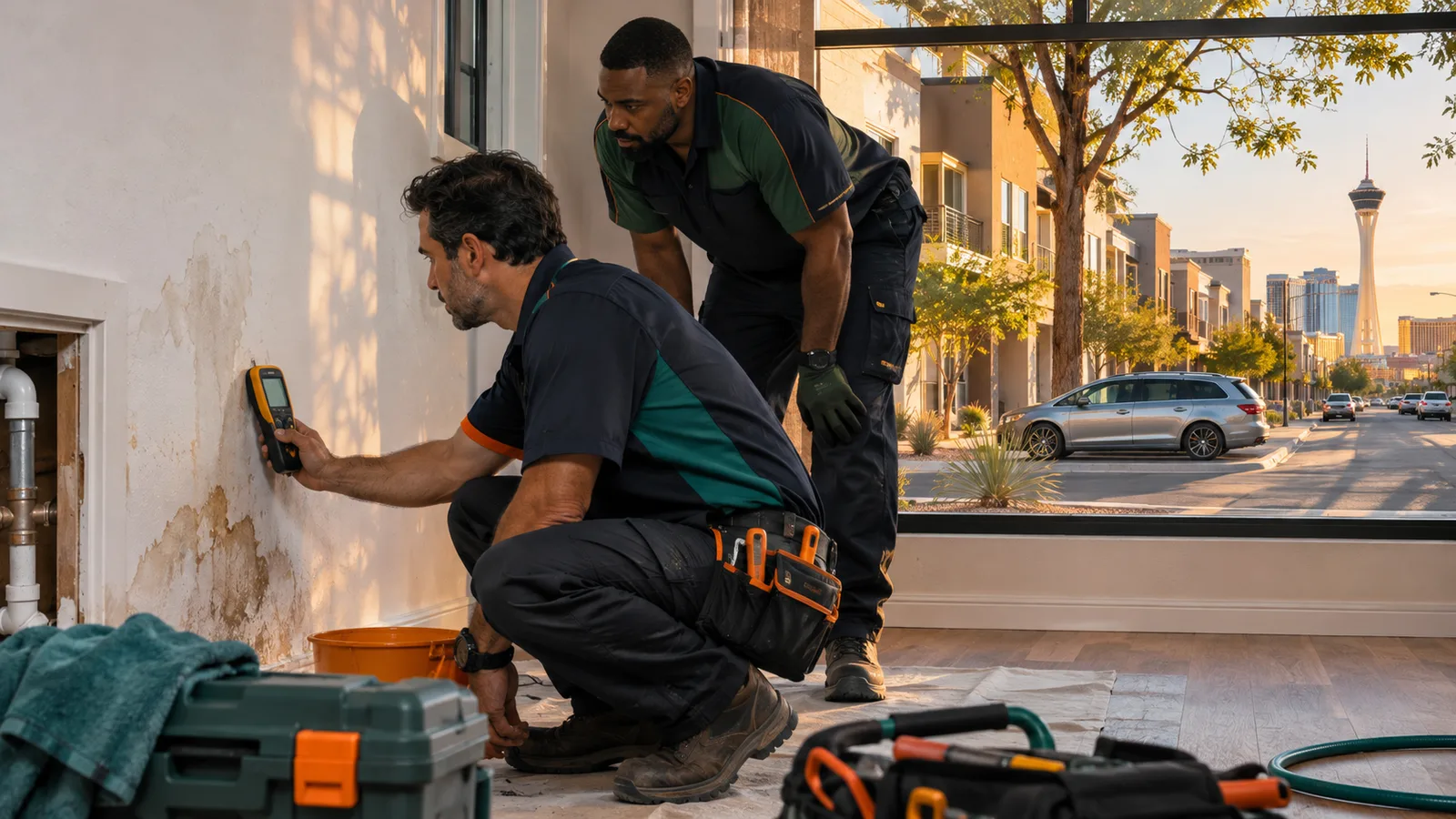
What Las Vegas leak detection involves
Las Vegas leak detection is about finding the source of water before opening a wall, floor, or stretch of yard. A damp baseboard may point to a supply pipe, a drain, or water that traveled from another room. A contractor starts with the visible signs, checks the plumbing layout, and chooses tests that fit the suspected leak. The aim is to identify a repair location and explain the evidence behind it.
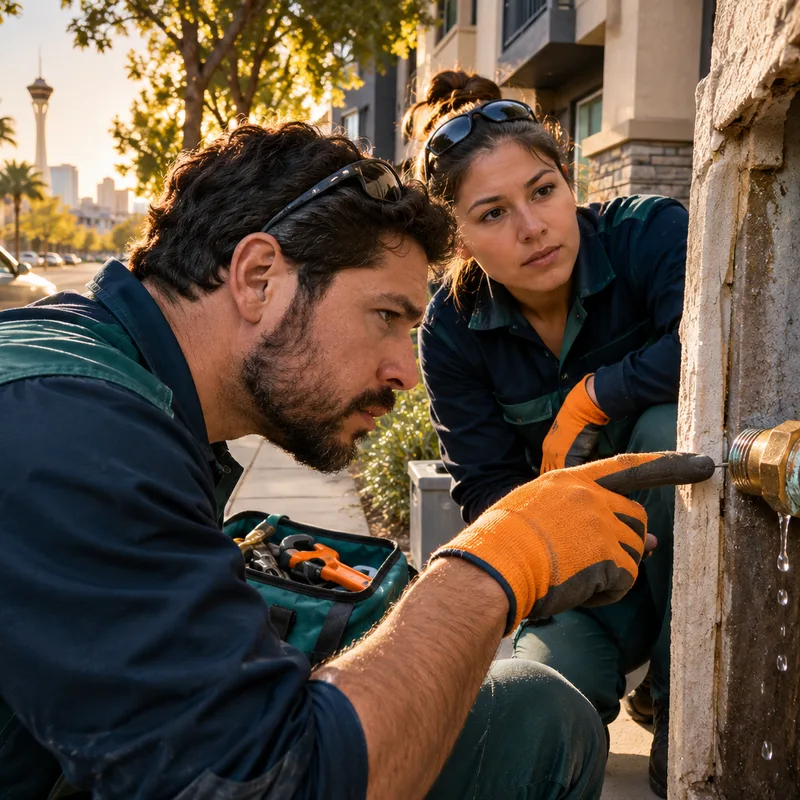
Supply-line leaks can occur at fittings, valves, or sections of pipe concealed behind finished surfaces. A slab leak involves a pipe beneath a concrete floor; warm flooring, unexplained moisture, or the sound of running water when fixtures are off can be clues. Drain leaks may appear only when a sink, shower, or appliance is used. Irrigation leaks have a different pattern: unusually wet ground or water use tied to a watering cycle. These signs help narrow the search, but a stain alone rarely identifies the exact failure point.
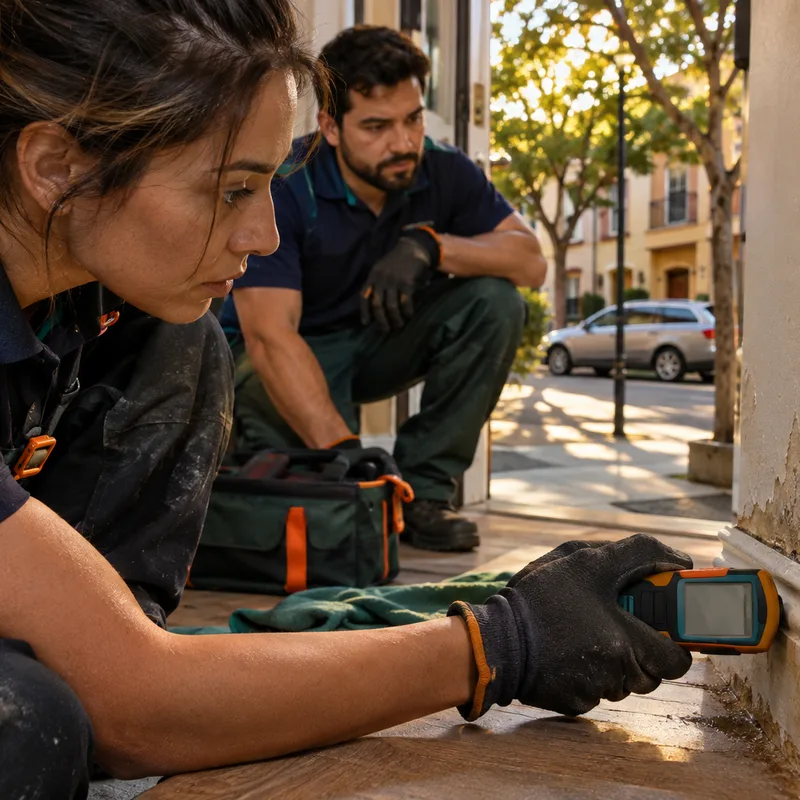
In homes built on concrete slabs, a suspected underfloor leak calls for a different investigation than a leak under an accessible sink. A contractor may compare water-meter readings with fixtures turned off, isolate branches of the plumbing, or pressure-test a line. Acoustic equipment can help locate water escaping a pressurized pipe. Moisture meters and thermal imaging can show where water has spread, though a temperature pattern by itself does not prove where a pipe is leaking. The contractor should explain what each finding supports before recommending an opening or repair.
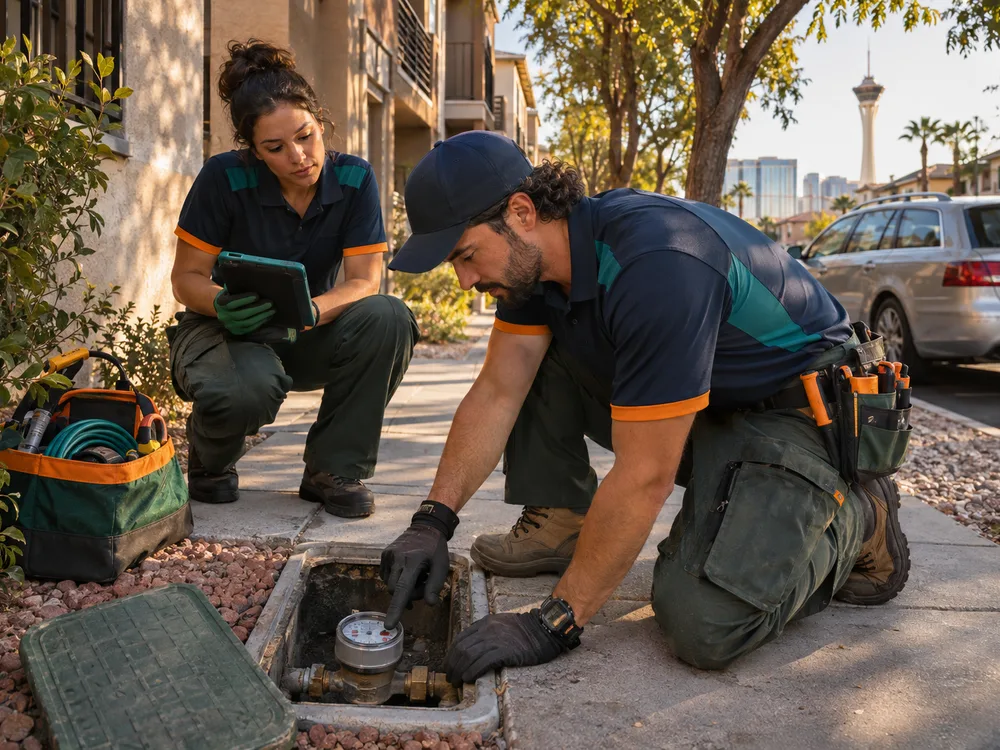
The Las Vegas Valley's dry climate can make a persistent indoor damp spot stand out, but evaporation can also hide surface moisture while water remains in flooring or wall materials. Las Vegas Valley Water District meter readings can be useful evidence of ongoing water use when fixtures are off. A contractor can help distinguish a supply leak from water that appears only during drainage, irrigation, or appliance operation.
Detection and repair are related but separate decisions. Once the source is identified, leak repair in Las Vegas may mean replacing a short exposed section of pipe, opening a wall to reach a fitting, or discussing options for a line beneath a slab. The contractor can describe the access required, the proposed repair, and any restoration of flooring or drywall that falls outside the plumbing work. Ask where the leak was found and how that location was confirmed before agreeing to an opening.
One call for this work
Connect with a local contractor who handles water and plumbing leak detection instead of working through a list of numbers.
Talk with the contractor
The person you speak with is the contractor. Discuss the signs you have noticed and ask how they would investigate them.
A local conversation
Get connected with a contractor who serves Las Vegas and the surrounding area, rather than someone hours away.
Your decision
The contractor explains the proposed work and gives the quote. You decide whether to proceed.
How the Call Works
Make the call
Note where you’ve seen moisture and when it appears.
Check availability
Phone hours and plumber availability vary.
Discuss the leak
If a plumber is available, ask what they would check and how they price the assessment.
A stain can spread while its source stays hidden. Call to request a connection with a local contractor who can investigate the leak and discuss the findings directly.
Call (877) 364-0435What a leak investigation may examine
Questions before you decide on leak detection
Can plumbing leak detection find a leak without opening the floor?
A contractor can often narrow a suspected underfloor leak with meter checks, pressure testing, and acoustic equipment before recommending an opening. The results determine whether access is needed to confirm the exact failure point or complete a repair. Ask the contractor which test supports the proposed location.
Does a damp wall mean the pipe behind it is leaking?
A damp wall does not establish that the pipe directly behind it is the source. Water can travel along framing or flooring, and the moisture may come from a drain, supply line, appliance connection, or another source. The contractor should compare the stain with fixture use, meter readings, and moisture measurements.
What if the leak appears only when a shower or sink runs?
Water that appears only during fixture use may point toward a drain, connection, or surrounding waterproofing rather than a continuously pressurized supply line. Note which fixture is running and where the water appears. A contractor can use that pattern to choose what to test first.
Will the same contractor handle leak repair?
Ask the contractor whether the proposed repair is within the work they handle and what access it requires. A confirmed leak beneath a slab may call for a focused pipe repair or a different route for the affected line. The contractor should explain the options and give the quote before you decide.
Should I shut off the water while waiting to discuss a suspected leak?
If water is actively escaping and you can safely reach the appropriate shutoff valve, turning it off can limit further water flow. Avoid using electrical fixtures near standing water. Tell the contractor what you observed and whether shutting off the water changed it.
Find out where the water is coming from
A local plumber can look for the source and explain your repair options.
Call (877) 364-0435